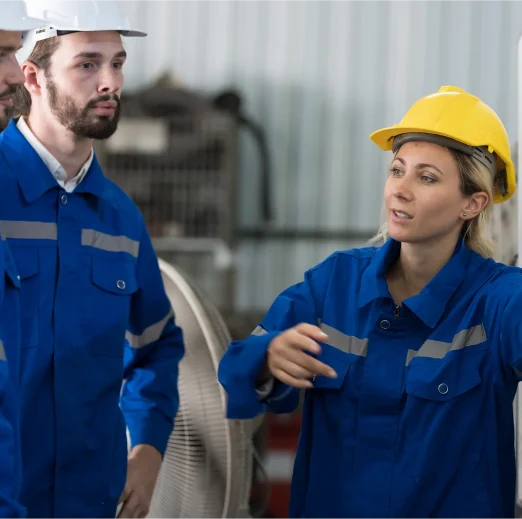
Our Schools – KEDIVIM HEDNO
The majority of our educational programs take place at HEDNO Schools in Athens and Florina, as well as through mobile educational units (KEM).
The educational activity of HEDNO Schools has its roots in 1964, with the establishment of the Model Technical School of Apprenticeship in Athens, which operated under the supervision of OAED until 1975, when it was renamed to Secondary Technical School (M.T.S./PPC). In 1965 the School of Accelerated Training of Craftsmen (STET/DEI) was founded, which in 1975 was renamed to Athens School of Accelerated Education (STE Athens) with a capacity of 400 students. In 1981 the TE of Florina was founded with a capacity of 150 students.
As of May 1, 2012, the Schools came under the jurisdiction of HEDNO, renamed Athens School and Florina School respectively. These are in the process of being licensed as a Lifelong Learning Center (KDVM) by EOPPEP, with the completion of the process expected within 2024.
Training close to the employee
Apart from education in our Schools, HEDNO brings knowledge to where the trainee is. Through the Mobile Educational Units (KEM), we implement decentralized educational interventions, with emphasis on technical issues related to the operation of the Network. Particular priority is given to safe work in overhead networks and meters – amenities.
Get to know our Schools
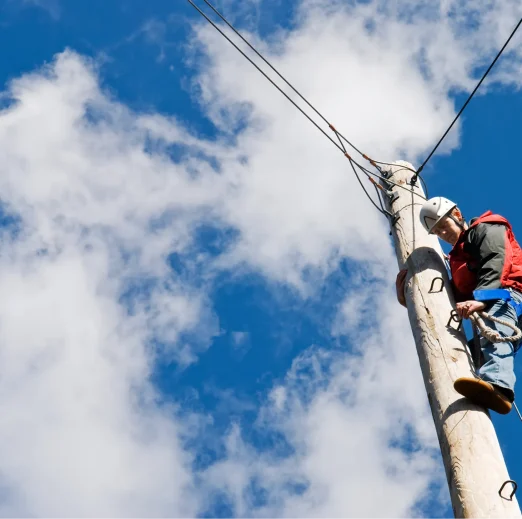
Overhead Networks
Trainees become familiar with:
- the basic elements of overhead distribution lines.
- the installation, operation and maintenance of wooden and concrete posts.
- the types of insulators and their applications in overhead networks.
- standard constructions in Medium (M.T.) and Low Voltage (L.T.) networks.
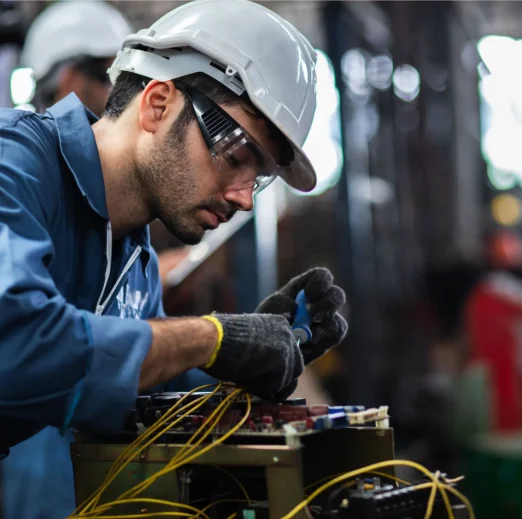
Meters & Facilities
Learners learn to:
- manufacture and connect single-phase and three-phase supplies safely.
- manufacture devices with single-phase and three-phase meters.
- identify breakdowns and maintain amenities.
The laboratory has a full range of meters – from older to modern “smart” meters – constantly adapting to new technological developments.
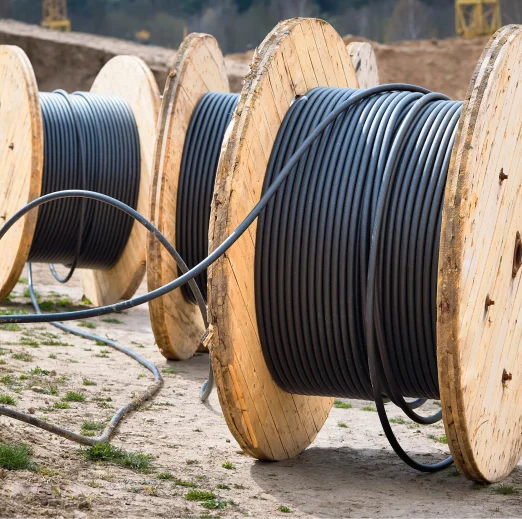
Underground Networks
The workshops include:
- connections of various types of cables (eg NAKBA, NAEKBA, XLPE).
- Simulation table of underground networks for troubleshooting training and handling.
- Fault detection, underground cable identification equipment and specialized cutting and drilling devices.
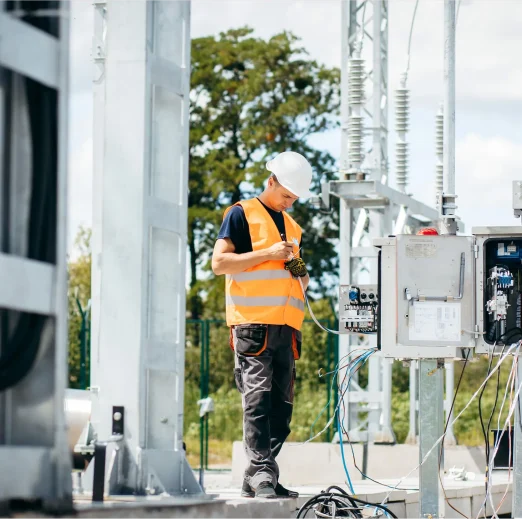
Substations
The laboratories have:
- complete set of indoor substation panels and Medium Voltage consumers.
- outdoor compact substations of 20/0,4 kV and 150/20 kV for link demonstration.
- Power transformer, with analysis of its parts and protection systems.
In this way, trainees gain a thorough understanding of processes and technologies, preparing them for the requirements of modern Network management.
Electrical Workshops
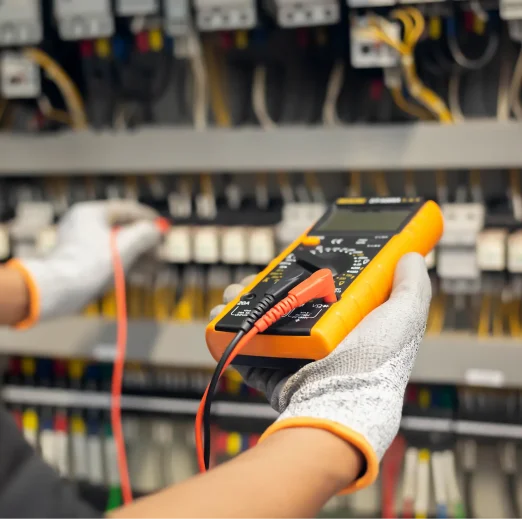
The laboratories are equipped with all the necessary instruments for learning and understanding the basic principles of electricity.
As part of the training, the following are carried out:
- measurements of electric current intensity and voltage.
- control of frequency and continuity of circuits.
- experiments on voltage drop and the behavior of electrical circuits.
These workshops provide trainees with the opportunity to gain tangible experience by developing their technical skills in the field of electrical engineering.
Electronics and Automation Laboratories
The Electronics and Automation laboratories have modern logistical infrastructure, offering electrical technicians the opportunity to understand and apply practically the basic and sophisticated principles of electronics and automation.
Specifically, the training includes:
- Automation
- Digital Electronics
- Power electronics