What to do in the event of a power outage
A power outage can disrupt everyday life at home, at work or at your business. Whether caused by scheduled works on the network or an unexpected fault, timely information and proper preparation can help you deal with the situation safely.
HEDNO works continuously to ensure the safe and reliable operation of the electricity Distribution Network and to restore power as quickly as possible in the event of a fault.
Safety Tips
Be prepared
Proper preparation helps protect you and your property until the power supply is restored. If you have been notified of an upcoming power outage, or if severe weather conditions are expected that could cause network outages, it is advisable to have the following available:
- A flashlight and spare batteries.
- Avoid using candles in areas where flammable materials are present.
- A fully charged mobile phone (please note that during a power outage, your router/modem will not operate, so internet access via your fixed connection will not be available)
- A fully charged power bank.
- A battery-powered radio.
- A supply of drinking water.
- A basic first-aid kit.
- A printed list of important telephone numbers.
- Cash
To better protect your electrical appliances and equipment
- Use surge-protected power strips.
- Install a UPS or voltage stabilizer for critical equipment.
- Have your internal electrical installation inspected and your Licensed Electrician Certification renewed by a licensed electrician.
Stay informed about scheduled power outages
You can check for scheduled power outages through HEDNO’s Scheduled Power Outages service or, alternatively, via the My DEDDiE App .

In the event of a power outage, we make every effort to restore electricity supply to your area as quickly as possible. However, for your safety, we recommend taking the following precautions:
First, check whether the problem is limited to your property
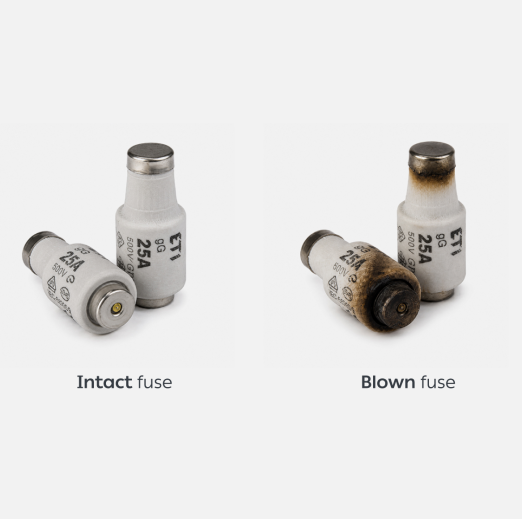
- Visually check the main switch and fuses on your electrical panel (e.g. check any indicator light, where available, or the blown-fuse indicator).
- Visually check whether the residual current device (RCD) has tripped.
- Check whether neighboring properties are also affected by the outage.
- If you need to leave your home, do not use the lift, even if the lift car is illuminated. In rare cases, there is a risk of becoming trapped. Do not leave your home without your keys, mobile phone and a flashlight.
- If the outage affects only your property, visually check whether the fuse or miniature circuit breaker protecting the HEDNO meter has tripped, without attempting to intervene or reset it.
- Do not touch electrical installations or metal components that may be live. Carry out a visual inspection only.
Check the status of the network
You can stay informed about the status of the network through the Scheduled Power Outages service and the My DEDDiE App. You can also enable notifications on your mobile phone, provided that internet access via your mobile network provider’s data service is available.
Protecting Equipment, Appliances and Food
During a power outage, to protect your electrical equipment, it is advisable to unplug sensitive electronic devices such as computers, televisions and network equipment. You should also avoid opening refrigerators and freezers unnecessarily, as this will help keep food cold for longer and reduce the risk of spoilage.
Report a fault
In the event of a power outage or a fault affecting the electricity network, you can report it online or by calling 800 400 4000 (free of charge), 11500 (charges apply according to your fixed or mobile telecommunications provider) or 211 190 0500 (standard local call rate).
Alternatively, you can submit a fault report from your mobile phone via the My DEDDiE App.
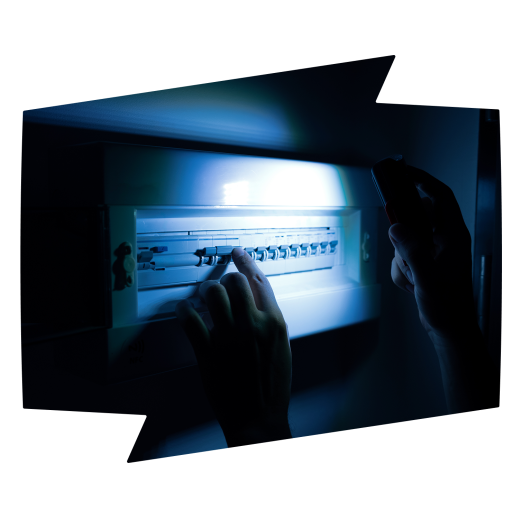
Once electricity supply has been restored, it is advisable to carry out a few basic checks to ensure that your electrical installation and appliances are operating properly.
1. Check that the main switch and fuses are operating normally.
2. Reconnect electrical appliances gradually
To avoid overloading the electrical installation:
- Switch on the essential equipment in the property first.
- Gradually reconnect high-consumption appliances, such as water heaters and electric cookers.
3. Check sensitive electronic equipment
Make sure that devices such as the following are operating correctly:
- Computers and peripherals
- Routers and network equipment
- Televisions and entertainment systems
- Alarm and video surveillance systems
4. In apartment buildings or commercial premises, it is advisable to check:
- Lifts, without using them, and common-area installations
- Emergency lighting and fire safety systems
5. Check heating, cooling and automation systems
After a prolonged power outage, the following systems may need to be reset or restarted:
- Air-conditioning units
- Heating systems
- Programmers and timers
- Smart devices and home automation systems
6. Food spoilage
After a prolonged power outage, it is advisable to check the contents of your refrigerator for any signs of food spoilage.
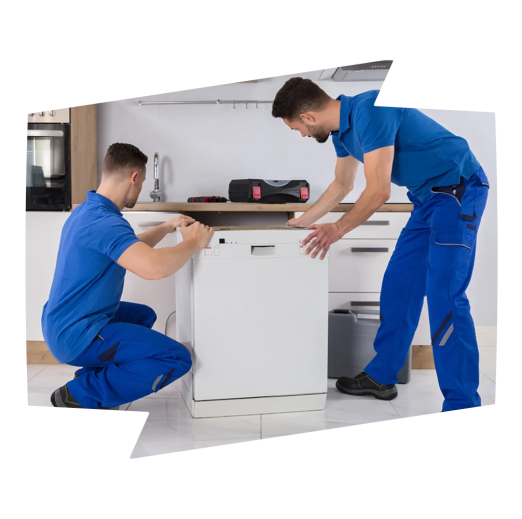
7. If you identify damage to an electrical appliance
HEDNO examines compensation claims only where the damage is caused by a confirmed neutral conductor failure. This is established following a technical inspection and investigation of the circumstances of the incident.
A neutral conductor failure is an electrical fault that can result in very large increases or decreases in voltage within an electrical installation. The neutral conductor is essential for the correct and safe operation of the electrical installation.
This is a rare occurrence that may cause damage to electrical and electronic appliances and differs from ordinary power outages or temporary voltage fluctuations that may occur during normal network operation.
Find out more about the eligibility requirements, required supporting documents and the steps you need to follow.
Compensation for damage to electrical appliances
Find out more about the eligibility requirements, required supporting documents and the steps you need to follow.
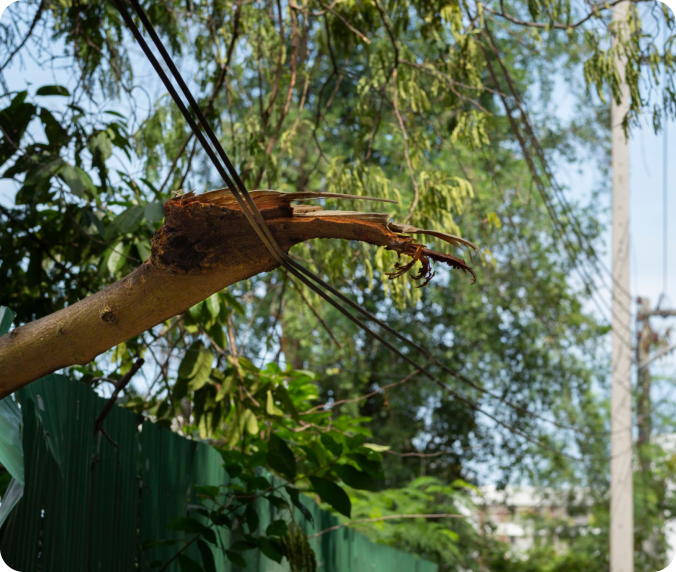
Have you identified damage to the network?
- Do not approach or touch cables or equipment that appears to be damaged. Keep at least 10 metres away.
- Avoid contact with metal objects, such as fences or door handles, that are in contact with conductors or electrical cables.
- Always assume that they may be live.
- Make sure you are in a safe location and notify us immediately.